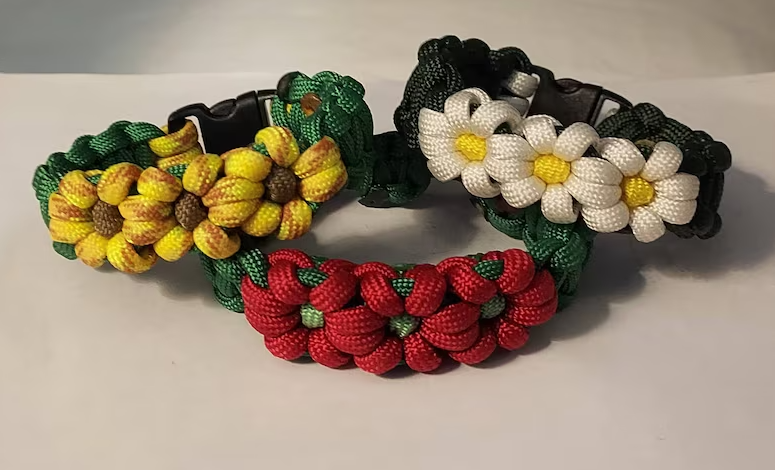

Paracord makers borrow ideas from everywhere — military gear, climbing hardware, even sci-fi movies. Hawaiian motifs fit into that world naturally: they’re graphic, they’re loaded with meaning, and they translate well into small, sculpted forms you can hang from a bracelet or anklet, especially when you know where to find paracord beads and charms that match the theme.
This guide walks through how to take classic Hawaiian symbols and re-imagine them as paracord beads and charms. We’ll look at materials that feel “island” rather than factory plastic, where to find paracord beads and charms that suit those designs, and how to use these icons in ways that stay respectful of their cultural roots.
What Makes Hawaiian Motifs Work So Well in Paracord Jewelry
Hawaiian motifs are bold, symbolic, and easy to read at small scale, which makes them ideal for paracord beads and charms. The nuance is that you need to balance visual impact with meaning, durability, and cultural respect.
Hawaiian symbolism was built for visual communication: flowers, turtles, waves, and hand signs all carry stories that people can “read” in a split second. That’s exactly what you want in a tiny charm hanging off a bracelet – something that still makes sense when it’s only 15–25 mm tall.
Because paracord bracelets already lean outdoorsy and ocean-adjacent (camping, hiking, paddling, EDC), Hawaiian motifs slide in without feeling forced. A honu bead on a survival bracelet is not a stretch; it’s a nod to navigation, protection, and endurance – qualities strongly connected to the sea turtle in Hawaiian culture.
These motifs also lend themselves to simple shapes. A hibiscus can be reduced to five petals and a central stamen. A wave can become a single curling line. The honu can be broken down into a shell, four flippers, and a head. Simple silhouettes cast better, wear better, and catch light without snagging paracord fibers.
The catch: you’re not just decorating; you’re using symbols rooted in a living culture. That means slowing down, checking meanings, and avoiding mash-ups that look Hawaiian but aren’t tied to genuine tradition. This article will keep coming back to that point.
The Meanings Behind Hibiscus, Plumeria, Honu, and Waves
Hibiscus and plumeria are tied to aloha, beauty, and welcome; the honu symbolizes good luck, guidance, and protection; waves stand in for the power and rhythm of the ocean. Knowing this helps you design charms that say what you intend.
Hawaiian motifs are not generic “tropical” clip art. Each one comes with a story:
- Hibiscus (Hawaiian state flower)
In Hawaii, the hibiscus is strongly associated with beauty, welcome, and the spirit of aloha; as the state flower, it stands for the islands’ vibrant life and culture.- In jewelry and art, a hibiscus often signals warmth, joy, and appreciation—good themes for gift bracelets.
- Plumeria
Plumeria is commonly linked to love, beauty, romance, and new beginnings, and it’s a classic flower in leis that represent hospitality and the aloha spirit.- Plumeria-inspired charms work well for friendship bracelets, wedding anklets, or “new chapter” gifts.
- Honu (Hawaiian green sea turtle)
The honu is one of the most cherished symbols in Hawaiian culture, representing good luck, endurance, longevity, and often protection or guardianship.- On a paracord bracelet, a honu bead can stand in for “safe travels” or “guided journey”—especially fitting for people who spend time on the water.
- Ocean waves
While there’s no single “official” wave symbol, stylized waves in Hawaiian jewelry and art echo the ocean’s role as provider, teacher, and route of travel. They hint at motion, change, and the mana (spirit) of the sea that surrounds every island.
Before you sculpt or buy a charm, decide what you want the bracelet to say. A hibiscus and plumeria combo reads as soft, celebratory, and welcoming. A honu and rolling wave pattern leans more toward navigation, resilience, and long-distance journeys.
Choosing “Island” Materials for Paracord Beads and Charms
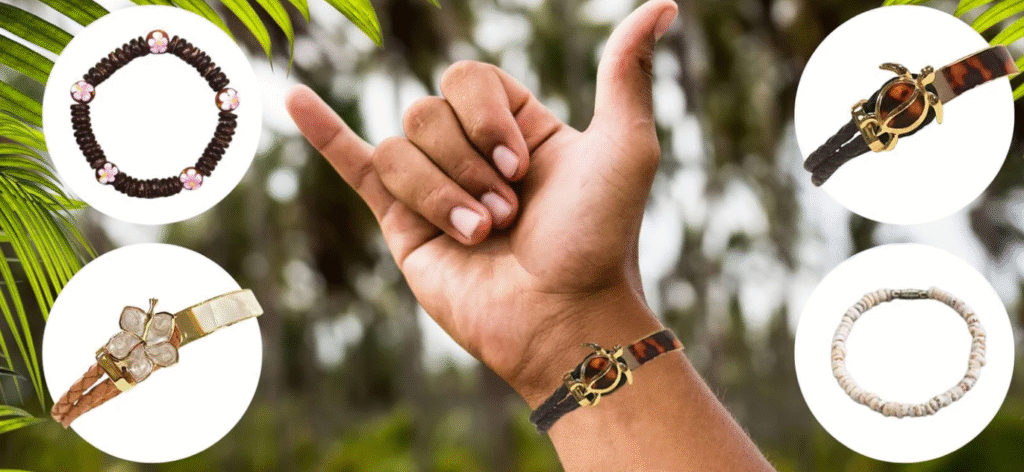
Metals like bronze and brass, and warm natural materials like hardwood and coconut shell, carry an “island” feel far better than glossy, mass-produced plastic. The trade-off is that natural materials need more care and design attention.
When you think “Hawaii,” you probably don’t think chrome-plated zinc. Material choice sets the mood before anyone notices the motif itself.
- Metals: bronze, brass, and copper accents
Bronze and brass give you a sun-warmed, aged look that suits Hawaiian themes; copper works in small doses for contrast.
- Bronze
- Deep, warm tone that pairs nicely with sand, lava, and ocean color palettes.
- Develops a natural patina with salt air and skin oils, which can make a honu’s shell or a wave’s crest look more alive.
- Brass
- Slightly brighter and more yellow; suits hibiscus and plumeria, especially if you want them to feel like jewelry rather than hardware.
- Copper accents
- Best used sparingly – eye inlays, wave highlights, or small shaka charms – so it doesn’t dominate the piece.
Choosing these metals gives your charm weight and presence. The cost is that they’re heavier than aluminum or plastic, and they can discolor if you never rinse them after saltwater use.
- Wood, coconut shell, and other organic materials
Good hardwoods and coconut shell bring real island texture, but they must be sealed properly and given gentle edges so they don’t cut the cord.
- Hardwoods (e.g., koa where ethically sourced, or other dense woods)
- Offer rich grain that works beautifully under carved hibiscus petals or honu shells.
- Coconut shell
- Lightweight, unmistakably tropical, and great for flat inlay discs with carved waves or flowers.
Wood and shell feel more “alive” than metal, but they need:
- Smooth, rounded edges to avoid sawing through paracord over time.
- Sealing (oil, wax, or clear coat) so sweat and salt don’t stain or crack them.
- What about plastics and resin?
Cheap plastics usually look out of place; high-quality resin can work if the design is thoughtful and not trying to fake metal or wood.
There’s nothing inherently wrong with resin, especially for colorful hibiscus or plumeria charms. It lets you play with transparent “ocean” effects and layered colors. Just avoid:
- Ultra-shiny, mass-produced beads that read as generic party supplies.
- Fake “metal” coatings that chip off after a few weeks of wear.
If you use resin, aim for artisan-grade pieces with clean edges, even casting, and a style that matches the cultural tone you’re after.
- Turning Hawaiian Symbols into Small, Wearable Charms
Break each motif down into its simplest shapes, round every edge, and respect paracord realities: hole size, thickness, and how the bead will sit against the wrist or ankle.
- Scaling motifs down
A hibiscus on a mural can sprawl across meters of wall. On a bracelet, you’ve got maybe 20–25 mm of height to work with. For most paracord bracelets and anklets:
- Target bead height: 18–25 mm for a primary feature charm.
- Hole diameter: 4–6 mm to accommodate 550 paracord (often doubled) without scraping.
Simplified design ideas:
- Hibiscus / plumeria
- Use five rounded petals, a recessed center, and maybe a subtle raised stamen rather than fully sculpted stamens that will snag cord.
- Honu
- Emphasize the shell shape and flippers; suggest the pattern with shallow engraving rather than deep, cord-catching grooves.
- Waves
- Go for a single curling crest or repeating “S-curve” rather than a whole storm scene.
- Hole placement, weight, and orientation
How the bead sits matters as much as how it looks. Ask yourself:
- Does the honu hang upright, or flip sideways when the bracelet moves?
- Is the hibiscus meant to sit flat against the wrist like a coin, or stand proud like a tiny sculpture?
- Does the bead’s weight cause the bracelet to rotate so the charm ends up palm-side all day?
For most builds:
- Place the hole so gravity pulls the motif into a readable orientation (e.g., through the shell, so the honu faces outward).
- Avoid beads that exceed ~30 g for a single charm on a slim wrist; heavier designs belong on thicker cuffs.
- Respectful Use of Hawaiian Cultural Icons
Treat Hawaiian symbols as part of an ongoing living culture, not clip-art; learn their meanings, avoid invented mash-ups, and credit Hawaiian sources or collaborators where you can.
There’s a line between appreciation and appropriation, and jewelry can cross it quickly if you’re careless. Some simple guardrails:
- Research meanings, don’t assume.
- Hibiscus and plumeria are often associated with aloha, beauty, welcome, and new beginnings.
- Honu carries layers of protection, guidance, and long life, and is tied to specific stories and families in some traditions.
- Avoid “fake Hawaiian” symbols.
- If you can’t trace a motif to Hawaiian practice or contemporary Hawaiian artists, don’t label it Hawaiian just because it has a wave or flower.
- Be cautious with sacred or lineage-specific imagery.
- Some motifs may function as ‘aumakua (family guardians) or carry spiritual significance; copying them for fashion alone can feel disrespectful.
- Credit Hawaiian voices.
- If you design a line heavily inspired by Hawaiian art, consider collaborating with Hawaiian artists, buying licensed designs, or at minimum linking to Hawaiian cultural resources in your product descriptions.
As a maker, your job is to understand enough that you’re not accidentally sending the wrong message or turning someone’s story into a trinket.
- Where to Find Paracord Beads and Charms
Start with reputable paracord suppliers for hardware, then look to small-batch metalworkers, wood carvers, and Hawaiian-inspired jewelry makers for honu, hibiscus, plumeria, and wave charms that can adapt to paracord.
This is also the perfect place in your guest post to include a contextual link with the anchor Hawaiian paracord beads for bracelets pointing to your preferred shop or collection page.
- Paracord-focused suppliers
Big paracord retailers often carry:
- Metal slider beads that can be engraved with waves or flowers.
- Spacer beads in bronze and brass that complement feature charms.
- Bulk cord in ocean-friendly color palettes.
Look for suppliers that are known in the paracord community for good cord and hardware; many of them also collaborate with YouTube tutorial channels and feature project ideas. ()
- Small makers and custom casters
For honu shells, hibiscus medallions, and wave beads with real character:
- Search for Hawaiian jewelry artists who work in bronze, brass, or koa and ask whether their small pendants can be drilled or adapted for 4–6 mm cord.
- Check artisan marketplaces for “Hawaiian turtle charm,” “plumeria bead,” or “hibiscus pendant” and look for makers who talk clearly about the stories behind their designs.
These are ideal spots to place that internal anchor link: mention that some shops curate Hawaiian paracord beads for bracelets – then link to your paracord-bead category page.
- Upcycling existing charms
If you already have Hawaiian-inspired jewelry:
- Old plumeria pendants can become focal beads if you drill a slightly larger, smooth hole and round any sharp points.YouTube
- Flat wave pendants can be laced into trilobite or ladder-style bracelets as in-line plates instead of dangling charms.
Just be careful not to weaken the pendant with aggressive drilling, and sand all edges so they don’t cut through paracord under tension.
Simple Hawaiian-Inspired Paracord Bracelet and Anklet Ideas
You don’t need complex weaves to show off a well-designed Hawaiian charm; keep the cord work simple and let the motif and palette do the talking.
Here are a few build concepts you can explain step-by-step for your readers:
- Single-charm surf bracelet
- Weave: Flat cobra or Solomon bar in ocean blues with a sand-colored tracer.
- Charm: One honu bead centered on the top of the wrist.
- Story: “Safe travels over water” bracelet for surfers, paddlers, or anyone who feels at home near the sea.
The trade-off here is simplicity vs. customization: it’s quick to make and easy to size, but you’re limited to one main symbol.
- Lei-inspired flower bracelet
- Weave: Round or half-round braid in leaf greens.
- Charms: Three small hibiscus or plumeria charms spaced around the bracelet, or one feature flower plus tiny metal spacers.
- Story: Carries the feeling of a lei – welcome, love, and celebration – into daily wear.
More charms mean more weight and movement, so advise readers to keep the bracelet slightly looser for comfort.
- Barefoot beach anklet
- Weave: Simple twisted or fishtail braid in tan and turquoise.
- Charms: One small wave charm and one plumeria or hibiscus, both light enough for ankle wear.
- Story: Designed for walking beaches and tidepools, where driftwood, foam, and flowers meet.
Because anklets get more sand and salt than wrist pieces, recommend rinsing in fresh water after each beach day and patting dry, especially when using brass, bronze, or wood.
Finishing and Care: Keeping Your Island-Style Pieces Looking Good
Use closures that can handle water and sun, melt and lock cord cleanly, and teach wearers how to rinse and dry their bracelets so metal and wood age gracefully instead of corroding or cracking.
Practical tips to include for DIY makers:
- Closures:
- Adjustable sliding knots or sturdy metal shackles work well. For surf or paddle use, avoid weak fashion clasps.
- Cord ends:
- Melt paracord tips neatly and mushroom them into knots so they won’t slip through the bead holes under load.
- Metal maintenance:
- Suggest a quick freshwater rinse after ocean exposure and an occasional wipe with a soft cloth to manage patina on bronze and brass.
- Wood and shell care:
- A light application of wax or oil now and then helps prevent drying and hairline cracks, especially in hot, dry climates.
The goal is for your Hawaiian bead or charm to look better after a season of wear, not worse—more like well-used surf gear than disposable fashion.
Conclusion: Carrying a Little Aloha on Your Wrist
Hawaiian-inspired paracord beads work best when the symbolism, material, and design all pull in the same direction—and when you’ve taken the time to understand what those symbols mean.
By focusing on a few core motifs you give yourself enough range to tell real stories without turning your bracelet into a noisy collage. Pair those motifs with island-appropriate materials like bronze, brass, and wood, and suddenly your paracord project feels like something that belongs at the shoreline, not just in a gear drawer.
Most importantly, approach Hawaiian symbols with respect. Learn the meanings, credit local sources when you can, and avoid treating deep cultural icons as generic “tropical” decoration. When you do that, every knot and bead choice starts to carry more intention, and the finished bracelet or anklet becomes what it should have been all along: a small, wearable piece of aloha.

